THE QUARTERLY
[ CONVERSATION ]
A slow correspondence on seeing
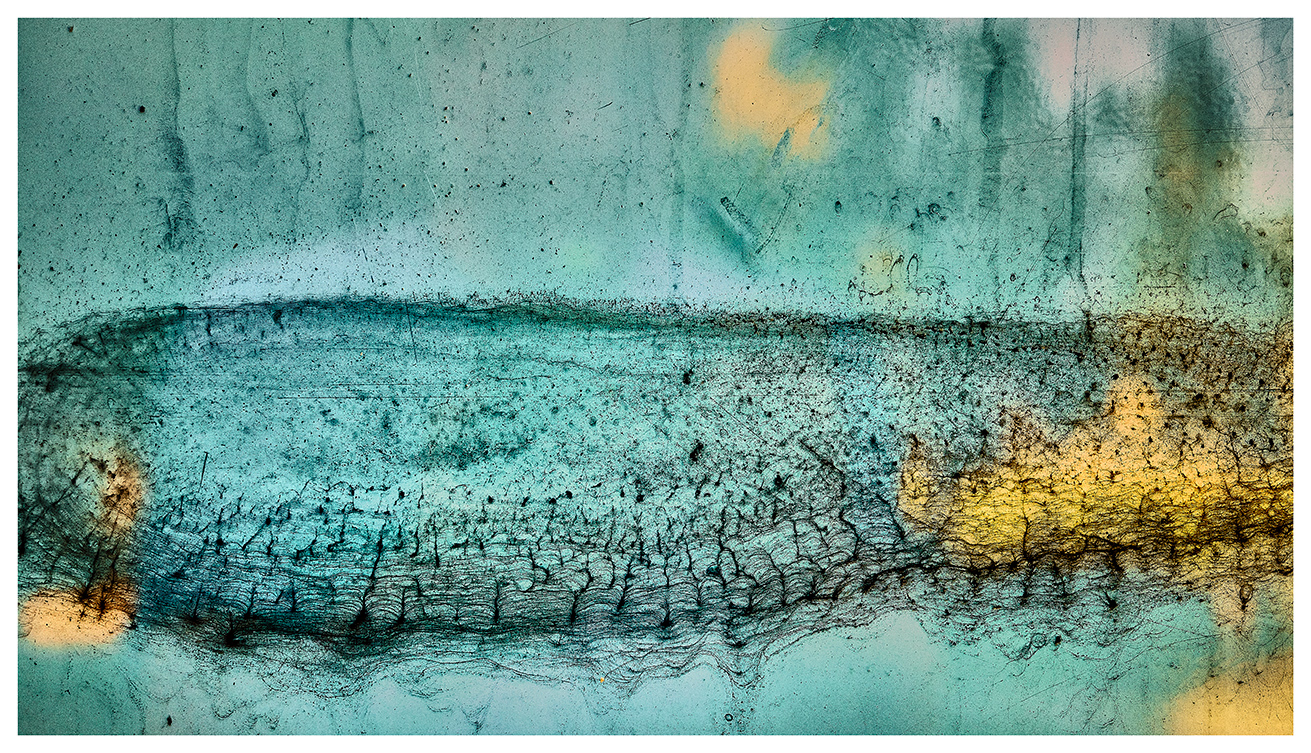
Street Reflections No. 7 (2023) by Stephen Lambeth.
Why This Exists
I wrote poetry before I made anything else. It was dark. A product of growing up gay in rural Australia without the knowledge of what that meant, and worse, without the language to describe it. When you cannot name what you are, you find other ways to reach toward it.
I turned to photography as a way of transcending what felt ugly in the world and to capture what felt true. The early works were landscape, vast and luminous and searching. Looking back, I understand it as a kind of survival practice before it became an artistic one. The camera gave me a way of making the world legible when I could not yet make myself legible within it.
Some tools feel like learning. Others feel like recognition. The printing press, the camera, the loom each felt like coming home, not instruments I acquired but instruments that fit the way I already was. The Leica, especially. I picked it up, and it was already seeing how I had been trying to see.
This quality of recognition, I have come to understand, is something my father gave me without either of us knowing it. He did not teach me photography. He taught me something harder to name: how to question, how to look, how to be genuinely present with what was in front of him. The kind of wisdom that children notice only in retrospect, that seems to arrive in parents as we ourselves grow older. Not technical knowledge but a way of meeting the world with curiosity rather than confirmed expectation. He always said that parents get smarter as their children age. What he meant, I think, is that we finally learn to see what was there all along.
The beliefs I inherited about photography came from elsewhere, from the culture, from the tradition, from the accumulated weight of what the medium was supposed to mean. They arrived the way religion arrives at birth: unchosen, unexamined, feeling like nature rather than framework. I navigated by them for years without knowing they were a framework at all. It took his death to make the glass visible, to reveal that I had been seeing through something without knowing it was there. The unlearning that followed was not a rejection of what he gave me. It was the opposite. Questioning the inherited framework was exactly what he had been modelling all along.
That kind of attention, slow, returned to, and revised, feels increasingly rare and increasingly necessary.
We live inside systems that are very good at delivering information and very poor at creating the conditions for understanding. Algorithms build walls around what we think, confirming what we already believe and quietly removing what might complicate it. The digital technologies that were supposed to connect us have, in many cases, produced a particular kind of loneliness, the loneliness of the person who is constantly receiving and rarely, genuinely, seen. The gods we have made from data tell us what to trust and what to discard, and we have largely stopped asking who built them and what they optimised for.
Meanwhile, some of the most important conversations are not happening at all. How do you warn a civilisation ten thousand years from now about buried nuclear waste in a language that may not exist yet? What does survivorship bias do to the stories a culture tells about itself, in its architecture, its sacred texts, its inherited frameworks for seeing? What is lost when the poetic and the scientific stop speaking to each other? What does it cost us to outsource our attention to a screen?
These are not niche concerns. They are the questions underneath most of the noise.
The Quarterly Conversation exists because I needed a form for this kind of thinking, one that moves at a different pace from the feed, that can hold an idea long enough for it to become something, that can let people see into how I think without turning the work into autobiography. It is a slow correspondence. It arrives four times a year. It takes its time.
It is also, I will be honest, a way of making myself the author of my own story rather than a footnote in someone else's. Photography gave me a way of seeing. Writing gives me a way of saying what I see. The Quarterly Conversation is where those two things meet, in the company of thinkers, artists, and scientists who got to certain questions before I did and left markers along the way.
You are welcome here if you find that worthwhile.
If you read something that stays with you, or that you want to push back on, or that reminds you of something you had almost forgotten, write back. That is what correspondence is for.
Stephen