THE QUARTERLY
[ CONVERSATION ]
A slow correspondence on seeing
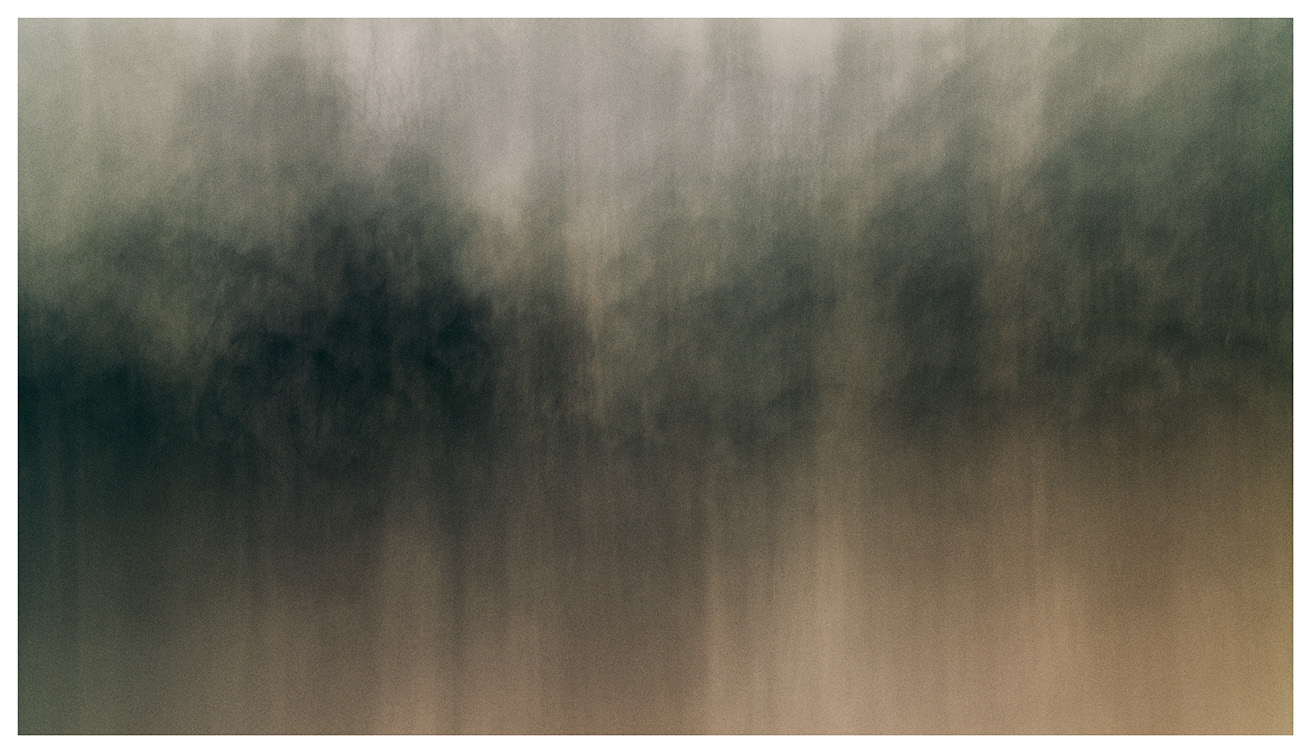
By the Dam (202o) by Stephen Lambeth.
Echoes
In physics, an echo is the repetition of a sound returned by reflection: the original call meeting a surface and returning, changed and delayed, carrying the shape of the distance it has travelled. And like any good Australian, I know that 'Coo-ee' is what you call out when you are lost in the bush, sending your voice into the trees and waiting to hear what the landscape sends back.
But an echo is also something else. A remnant. A vestige. The trace of something that has passed, still present in the air after the original sound has gone.
That is the sense I mean here.
Between issues of THE QUARTERLY CONVERSATION, the thinking does not stop. Ideas surface that do not quite fit the main essay. A book arrives that belongs in the conversation. An image catches the light in a way that returns me to something already written. A reader's question reshapes what I thought I knew.
These are the Echoes: shorter, lighter, less formal than the quarterly issues but part of the same correspondence. A fragment from the margins of the current issue. A work by another artist whose seeing feels related. An observation made while walking, or waiting, or looking at something ordinary long enough for it to become otherwise.
They are not summaries or supplements. They are what remains after the main conversation has settled, still resonating, still finding its way back.
One or two will arrive between each issue. They will not demand much of your time. They ask only the same thing the Quarterly itself asks: that you slow down long enough to let something land.
────
Autumnal Echoes
Whispered Infusion Block in Amber, Alabaster, and Brown by Jamie Harris
The Science of Prediction
The glass essay ended with a question about trust, about what it means to see through a material that bends what passes through it while appearing not to act at all.
Jamie Harris works in that gap.
A sculptor based in Brooklyn, Harris uses Italian-trained techniques of layering and banding multiple-coloured glass bubbles to generate washes of sensuous, painterly colour within a kiln-cast solid mass. He has invented a process that begins with coloured motifs blown as bubbles at the furnace, transformed into solid glass masses, and finally cast into blocks, which are then carved and polished into their final form.
So much of the fabrication is invested in what he calls the science of prediction: anticipating how a colour blown as a translucent bubble will dilute days later when cast as something dense and solid, forecasting how fields will distort and move as elements join in the kiln. The finished pieces are stop-motion reinterpretations of the traditional Italian 'incalmo' format, tracking in place the flowing movement of molten glass, capturing the subtle gradation from a whisper of transparent colour to a saturated intensity.
What he is describing is a practice of working with glass's refusal to be entirely knowable. The finished sculptures are not exactly what he planned. They are what the material agreed to, within the range of what he could foresee. The gap between intention and outcome is not a flaw in the process. It is the process.
Look at the Infusion blocks, and you will see colour that does not sit on the surface. It is structural, woven into the mass of the glass itself, inseparable from the form. Light enters these objects and negotiates with what it finds. What emerges is something the maker could approximate but not fully dictate.
Every vessel is a theory about what deserves to be held. Harris's vessels hold something rarer than wine or memory. They hold the moment where the maker's knowledge met its edge, and something true arrived in the space that opened there.
Jamie's work can be found at jamieharris.com. Spend time with the Infusions and the Incalmo Orbs, especially. They reward the kind of 'looking' the Quarterly is trying to practice.